
If you’ve spent any time scrolling through social media recently, you’ve probably noticed more and more home ice cream makers talking about “clean label” products.
The focus is often on using a handful of recognisable ingredients and avoiding artificial colours, flavours, preservatives and additives. While clean label ice cream certainly appeals to some health-conscious consumers, it isn’t currently the standard approach for commercial ice cream and gelato production in the UK. Most customers visiting parlours and gelaterias are still choosing their ice cream based on flavour, appearance and overall experience rather than the ingredient declaration.
So, what are the benefits of creating a cleaner label product, and is it something the industry should be preparing for?
What does “clean label” actually mean?
There isn’t one official definition of clean label, but generally it refers to products made with fewer, more familiar ingredients that consumers recognise and understand.
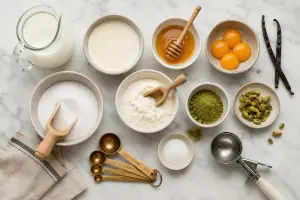
A homemade ice cream recipe may contain just four ingredients:
- Milk
- Cream
- Honey
- Egg yolks
Commercial ice cream, however, is produced on a much larger scale and has very different requirements. A typical recipe may include:
- Milk
- Cream
- Sugar
- Dextrose
- Skimmed milk powder
- Glucose
- Stabilisers
- Emulsifiers
At first glance, that ingredient list looks much longer, but every ingredient has been chosen for a reason.
Why are these ingredients used?
Milk and cream are usually pasteurised to remove harmful bacteria and may also be homogenised to create a smoother, more consistent product that is less likely to separate.
Sugars each play a different role. Honey is one of the most natural sweeteners available, while refined sugar is processed to produce almost pure sucrose. Dextrose, made by breaking down plant starches such as corn, wheat or potatoes, doesn’t just provide sweetness, it also helps control freezing and improve texture.
Skimmed milk powder improves body and consistency, while egg yolk, commonly used in homemade recipes, must be pasteurised in commercial production to ensure food safety.
Stabilisers and emulsifiers are often the ingredients that attract the most attention. Many are derived from natural plant gums, seaweed extracts or egg yolks. Their job is to bind water, reduce ice crystal formation and create the smooth, creamy texture consumers expect.
Without these ingredients, producing a product that can be consistently manufactured, transported, stored and served commercially becomes much more difficult.
How does the body process these ingredients?
Another topic often discussed alongside clean label is how our bodies digest different ingredients.
Milk, cream and sugars are broken down by the digestive system using enzymes and stomach acid. Honey, as a naturally occurring sugar, is digested in much the same way.
Stabilisers and emulsifiers behave differently. Because they are used in such small quantities for technical purposes, many pass through the digestive system without being fully digested.
Artificial colours and flavours also receive plenty of attention. Approved artificial colours are considered safe, although some have been linked to hyperactivity in certain children. Artificial flavours are also generally considered safe, with only a small number of cases linked to allergic reactions.
The cost of going clean label
Creating a clean label product isn’t simply a case of removing a few ingredients. Many of those ingredients perform important functions, so manufacturers need to find alternative ways to achieve the same result.
Shorter shelf life
Stabilisers and preservatives help maintain freshness and texture over time. Without them, clean label ice cream may:
- Become icy more quickly.
- Develop texture issues during storage.
- Have a shorter shelf life.
This can increase waste and costs throughout the supply chain.
Texture challenges
Creating the smooth, creamy texture consumers expect is much more difficult without traditional stabilisers and emulsifiers.
Manufacturers may experience:
- Larger ice crystals.
- Reduced creaminess.
- Less consistent texture between batches.
Higher production costs
Natural ingredients and clean label alternatives are often more expensive than conventional ingredients.
Additional costs can include:
- Premium ingredient sourcing.
- Product reformulation.
- Research and development.
- More specialised manufacturing methods.
These costs are often reflected in the final retail price.
Consumer misunderstanding
One of the biggest misconceptions is that “clean label” automatically means healthier.
Consumers may assume a clean label product is lower in calories, lower in sugar or more nutritious. In reality, clean label ice cream can contain similar levels of sugar and fat to a conventional recipe. The difference lies in the ingredient declaration rather than the nutritional profile.
Functional ingredients still matter
Commercial manufacturers need products that perform consistently throughout production, storage and distribution.
Stabilisers and emulsifiers help maintain texture, improve freeze-thaw stability and ensure products remain consistent during transport. Replacing these ingredients with natural alternatives is possible, but achieving the same functionality isn’t always straightforward.
Is clean label the future?
Clean label is undoubtedly a growing trend, particularly among home ice cream makers and smaller artisan producers. However, it isn’t necessarily the right solution for every commercial business.
For many manufacturers, consistency, texture, shelf life and value remain the highest priorities. Carefully selected functional ingredients continue to play an important role in delivering the quality customers expect.
That said, consumer interest in simpler ingredient lists is growing, making clean label a trend worth watching. As ingredient technology develops, manufacturers are finding new ways to create cleaner formulations without compromising on performance.
Our Top Clean Label Product Picks
If you’re looking to create cleaner label recipes, here are a few products worth considering:
Guibileo:
- Mascagel KP408A
- Amaretto Paste KPC650PB
- Caramel Mou KPC637PB
- Matcha KP485
La Preferita:
- Gianduia K01043B00B
At Antonelli, we can help you choose products that balance ingredient requirements, performance and flavour to suit your recipes.
Whether clean label becomes the new standard or remains a niche market, one thing is certain: consumers will always expect great-tasting ice cream. Finding the right balance between cleaner ingredients, product performance and commercial practicality will continue to be one of the industry’s biggest challenges – and opportunities – in the years ahead.