
There is one certainty I see year in, year out – as soon as we hit September, many begin to think about the festive season and how to prepare their business.
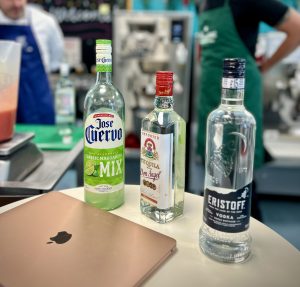
The ice cream industry is no different, and over the past couple of weeks I have had many people approach me for ideas regarding their Christmas ice cream or gelato recipes. But one type of recipe has dominated questions this year, and that is how to incorporate alcohol into recipes.
When it comes to festive tipples that we could include in our ice cream recipes we have the likes of mulled wines, prosecco, gin and tonics, Irish creams, the options are quite literally endless. But what do you need to consider when including alcohol into your recipes? I’ll take you through my thoughts below…
Can you sell alcohol ice cream?
One of the first things to ask yourself is whether you can legally sell alcoholic ice cream or will you need a license for each product?
My best advice for this is to either review with Trading Standards to identify the minimum allowable amount of alcohol. Alternatively, you could check with Simon Tasker from the Ice Cream Alliance (ICA) who is highly knowledgeable in this area.
Who is the product for?
We’re not simply talking about the classic rum and raisin flavoured ice cream here, we’re talking about making strong alcohol based ice creams, so you should ask yourself, how many adults are realistically choosing these flavours?
The majority of requests I receive for these type of recipes come from restaurants and for events (e.g. weddings). This ultimately works in favour of the ice cream, which must be served at quite a cold temperature in my experience.
Sorbet or ice cream?
Of course, there is that all important question, should you be making an alcohol ice cream or sorbet?
Realistically here, we need to consider the alcohol itself. Nobody wants a milky gin and tonic, so of course this would lend itself to being a delicious sorbet. Whereas the likes of an espresso martini would work perfectly as a deliciously milky ice cream. The key here is to take into account your base ingredients and what your customers will be looking for in their festive treats.
The downsides of alcohol in ice cream
You will be faced with a number of challenges when producing any ice cream recipe, but none more so than with an alcohol based ice cream or gelato.
The shelf life of these products are known to deteriorate rather quickly. Where you would typically get 7 days in a cabinet from a traditional ice cream, you may only get 3 with an alcohol based recipe.
We also mustn’t forget that booze isn’t cheap. When you want the taste of alcohol to really shine through in a recipe, chances are you’ll need a fair amount, leading to high costs. So you should ask yourself if you are prepared to charge a premium cost for your premium product.
Getting the right texture and structure
One of the biggest things about alcohol and ice cream is that it has an extremely, extremely high level of anti-freeze; this means that you run the risk of a sloppier consistency rather than that much-loved ice cream texture.
But fear not, there are ways to resolve this. So how do we counteract the anti-freeze or alcohol content within an ice cream recipe? The easy answer is…reduce the sugar.
The abv (alcohol by volume) of your product can negate how much sugar you need to have within your product. I typically aim, when making a sorbet, to have a total of 14% volume of sugar plus abv to give the ideal texture and scoopability.
When it comes to flavour, how much alcohol you use will very much be determined by the beverage you’re opting to use. For example, if your drink of choice is prosecco you would typically use a fair amount, whereas a gin flavour would use less. Think of it as you would a drink, you would have a whole glass of prosecco, but rarely would you ever have an entire glass of gin!
We must also consider how we can retain that warming, smooth texture of ice cream whilst ensuring the alcohol doesn’t break apart its structure; we do this with fibres and starches.
The most common fibre is inulin (aka vegetable fibre), and the most common sugar starch is maltodextrin. We will find that a good ratio of around 10-12% maltodextrin and inulin within a recipe will keep the product from becoming sloppy, instead giving us that sought after firm consistency.
Last but certainly not least, you must incorporate a strong stabiliser that will hold this consistency, preferably using a cold process stabiliser as this will allow us to produce smaller quantities.
When should you add your alcohol?
Whilst you may think that adding your total mix into your normal ice cream recipe before batch freezing will work, I would highly recommend adding the majority of your mix (minus the alcohol), then turning on your batch freezer, before adding your alcohol half way through the process. This will ultimately allow for quicker freezing and suspend it within the product more efficiently.
So, there we have it! Will you be incorporating alcohol flavours into your product range this festive season?
If you have any questions or would like to seek advice on your recipes, please don’t hesitate to contact me.
See you next time for the latest scoop!
Jonny